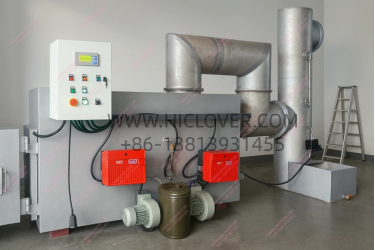
Namibia Waste Incinerator Market Report: Market Characteristics, Demand Trends, and Suitability of Modern Incineration Technology
1. Overview of Namibia’s Waste Management Environment
Namibia, with major cities such as Windhoek, Walvis Bay, Swakopmund, Oshakati, and Rundu, faces increasing pressures to modernize its waste-handling systems. Despite its relatively low population density, the country generates diverse waste streams due to growing healthcare services, coastal industrial activities, tourism-related operations, and expanding urban centers.
While Namibia maintains a strong environmental policy framework, the availability of compliant waste-treatment infrastructure remains limited outside Windhoek. This gap has created strong demand for engineered incineration systems capable of meeting international standards. The United Nations, UNDP, and health-sector partners contribute significantly through technical guidance, funding, and strengthening of environmental governance.
2. Key Market Characteristics
The Namibian waste-incineration market is shaped by unique structural factors:
-
High variability in waste composition, including medical, tourism-related, industrial, and community-generated waste.
-
Strong reliance on decentralized waste treatment, especially in remote regions such as Kunene, Kavango, Omaheke, and Hardap.
-
Environmental sensitivity, particularly along coastal areas like Walvis Bay and Lüderitz, where marine ecosystems require strict pollution control.
-
Infrastructure asymmetry, with rural clinics and remote outposts needing compact and easy-to-operate incinerator systems.
-
Regulatory pressure, driven by Namibia’s Ministry of Environment and supported by UN agencies focused on public health, emissions reduction, and safe disposal.
These factors shape a market that values efficiency, mobility, durability, and reliable emission-control performance.
3. Market Demand and Emerging Trends
Several trends define Namibia’s growing need for engineered incineration solutions:
-
Expansion of healthcare infrastructure
Hospitals and clinics in Windhoek, Oshakati, Katima Mulilo, and Keetmanshoop require reliable medical waste incinerators to meet rising service levels. -
Tourism and hospitality waste growth
Coastal destinations like Swakopmund and Walvis Bay produce significant waste streams that require hygienic disposal, including food, packaging, and contaminated waste. -
Mining and industrial activity
Mines in Erongo, Karas, and Kunene generate hazardous and semi-hazardous waste, creating demand for durable, high-temperature incinerators. -
United Nations and NGO operations
UN agencies frequently deploy incinerator systems to strengthen emergency preparedness and improve environmental health standards in remote communities. -
Focus on localized treatment
To reduce transport risks and cost, Namibia is investing in on-site waste treatment, creating strong demand for mobile and containerized incinerator systems.
4. Suitability of Incinerators for Namibia’s Local Conditions
Given Namibia’s climate, geography, and waste characteristics, suitable incinerator features include:
-
Multi-chamber high-temperature combustion for complete burnout of mixed or low-calorific waste.
-
LPG or diesel burners, ensuring stable combustion even in coastal humidity or desert wind conditions.
-
Top-loading systems, ideal for bulky community waste, tourism-sector waste, and rural health-facility operations.
-
Containerized/mobile configurations that allow installation in remote districts without extensive civil engineering.
-
Optional wet scrubbers or dry filtration in environmentally sensitive areas such as Walvis Bay and Swakopmund.
These features align with the procurement guidelines used in UN-supported projects across Southern Africa.
5. HICLOVER Incinerators: Advantages for the Namibian Market
HICLOVER provides multiple waste-incineration models well suited for Namibia’s diverse operational needs:
-
Top-loading waste incinerators suitable for municipal, tourism, and agricultural waste streams in Windhoek and Swakopmund.
-
Medical waste incinerators with secondary combustion, ideal for hospitals in Oshakati, Rundu, and Katima Mulilo.
-
Containerized mobile incinerators, preferred by UN missions, NGOs, and remote facilities for rapid deployment and reduced installation effort.
-
Optional gas-cleaning systems, strengthening compliance in protected or high-sensitivity zones.
-
Robust structural design and automated burners, ensuring reliable operation in Namibia’s extreme desert climate.
To reinforce keyword relevance, here are internal links pointing only to HICLOVER pages:
-
medical waste incinerator Namibia
-
top-loading waste incinerator
-
municipal waste incinerator system
-
containerized mobile incinerator
-
Namibia waste treatment equipment
6. Additional Highlight: Namibia’s Coastal Environmental Protection Priority
Walvis Bay, Swakopmund, Lüderitz, and other coastal zones represent some of Namibia’s most environmentally sensitive areas. Waste mismanagement in these regions can affect fisheries, tourism, and marine ecology. High-efficiency incineration, especially with optional filtration stages, plays a crucial role in preventing contamination and protecting Namibia’s iconic Atlantic coastline.
This theme is increasingly emphasized in environmental planning documents supported by the United Nations and local authorities.
7. Market Outlook
Namibia’s incinerator market is expected to grow steadily due to:
-
Continued expansion of national healthcare services
-
Strengthened environmental oversight from both government and UN partners
-
Investment in localized waste infrastructure in rural provinces
-
Increased industrial and mining activity
-
Rising tourism-sector waste generation along the coast
These conditions position Namibia as an attractive and steadily growing market for modern waste-incineration technologies.
Namibia requires waste-incineration solutions that operate reliably in varied climatic zones—from desert regions in Hardap and Omaheke to coastal cities like Walvis Bay and Lüderitz.
HICLOVER’s engineered systems, with options for mobile deployment, multi-chamber combustion, and advanced emissions control, align with Namibia’s technical, regulatory, and humanitarian needs. Their proven durability and field adaptability make them well suited for long-term national and donor-supported waste-management projects.
Kurze Zusammenfassung auf Deutsch:
Namibia zeigt einen wachsenden Bedarf an modernen Abfallverbrennungsanlagen, geprägt durch steigende medizinische Abfälle, Tourismus, Bergbau und strenge Umweltanforderungen. Städte wie Windhoek, Swakopmund und Walvis Bay benötigen zuverlässige Lösungen mit hoher Effizienz und stabiler Emissionskontrolle. HICLOVER-Incineratoren bieten robuste, anpassungsfähige und leicht installierbare Systeme, die sowohl lokalen Behörden als auch UN-Organisationen eine langfristige, konforme Entsorgung ermöglichen.
2025-12-11/14:42:11
|
Incinerator Items/Model |
HICLOVER TS100(PLC)
|
|
Burn Rate (Average) |
100kg/hour |
|
Feed Capacity(Average) |
150kg/feeding |
|
Control Mode |
PLC Automatic |
|
Intelligent Sensor |
Continuously Feeding with Worker Protection |
|
High Temperature Retention(HTR) |
Yes (Adjustable) |
|
Intelligent Save Fuel Function |
Yes |
|
Primary Combustion Chamber |
1200Liters(1.2m3) |
|
Internal Dimensions |
120x100x100cm |
|
Secondary Chamber |
600L |
|
Smoke Filter Chamber |
Yes |
|
Feed Mode |
Manual |
|
Burner Type |
Italy Brand |
|
Temperature Monitor |
Yes |
|
Temperature Thermometer |
Corundum Probe Tube, 1400℃Rate. |
|
Temperature Protection |
Yes |
|
Automatic Cooling |
Yes |
|
Automatic False Alarm |
Yes |
|
Automatic Protection Operator(APO) |
Yes |
|
Time Setting |
Yes |
|
Progress Display Bar |
3.7 in” LCD Screen |
|
Oil Tank |
200L |
|
Chimney Type |
Stainless Steel 304 |
|
1st. Chamber Temperature |
800℃–1000℃ |
|
2nd. Chamber Temperature |
1000℃-1300℃ |
|
Residency Time |
2.0 Sec. |
|
Gross Weight |
7000kg |
|
External Dimensions |
270x170x190cm(Incinerator Main Body) |
|
Burner operation |
Automatic On/Off |
|
Dry Scrubber |
Optional |
|
Wet Scrubber |
Optional |
|
Top Loading Door |
Optional |
|
Asbestos Mercury Material |
None |
|
Heat Heart Technology(HHT) |
Optional |
|
Dual Fuel Type(Oil&Gas) |
Optional |
|
Dual Control Mode(Manual/Automatic) |
Optional |
|
Temperature Record |
Optional |
|
Enhanced Temperature Thermometer |
Optional |
|
Incinerator Operator PPE Kits |
Optional |
|
Backup Spare Parts Kits |
Optional |
|
Mobile Type |
Optional:Containerized/Trailer/Sledge Optional |